The Three Forces Working Against You
A day on the mountain stacks three independent hydration pressures.
Altitude. The Australian alpine villages sit around 1,500 to 1,800 metres. Even at that modest altitude, every breath in is drier and less oxygen-rich than at sea level, and the body responds by breathing faster and deeper. More air through the lungs means more water out through the lungs. Respiratory losses can rise 30 to 50 percent versus a sea-level baseline at the same effort.
Cold dry air. Alpine air is also typically very low in absolute humidity. Each breath pulls more moisture out of the airway lining than the same breath at coastal temperatures.
Thirst suppression. Cold reduces the thirst signal. Hard exertion in the cold reduces it further. The result is that you can do six hours on the mountain and not feel particularly thirsty, even when your fluid balance is well off.
The Insulated-Bottle Question
Hydration packs are the obvious choice and the obvious problem. The tube freezes by mid-morning unless you are insulating it actively, blowing back into the line after every sip, or running an electrically heated pack (uncommon for casual snow trips).
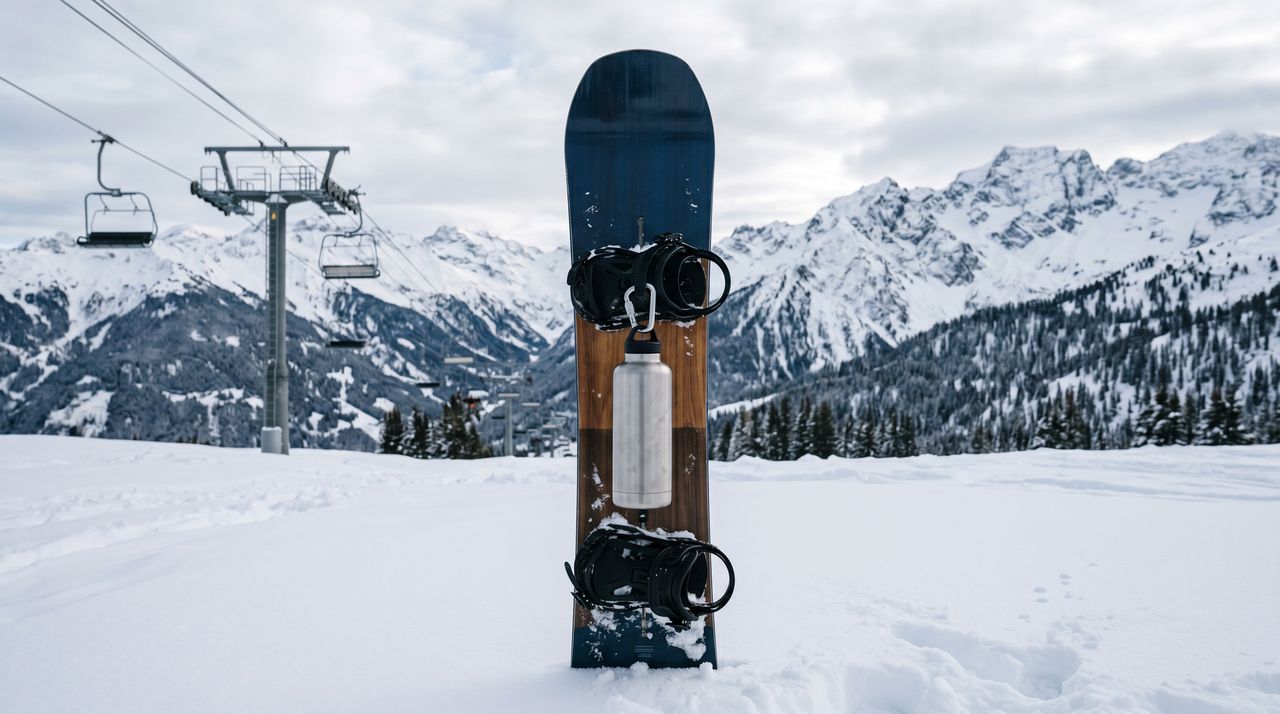
The simpler kit for a normal day at Perisher or Falls Creek is a 750 millilitre insulated stainless bottle kept in the chest pocket of a jacket. Body heat keeps it liquid. Refill at the lodge over lunch. A second filled bottle in the day pack handles afternoon and apres.
Sodium Still Matters Under the Layers
You sweat more skiing than the cold air outside suggests. Hard laps and short hike-to-line sections produce real heat under the shell, and the moisture-wicking layers underneath move sweat away from the skin so you do not feel it pooling. You are losing sodium the whole time.
A sensible mix is something like one bottle of plain water and one bottle of a moderate electrolyte mix per active day. Sachet-format products travel well: a few Nuun tablets, a couple of Skratch Labs sachets, or a Tailwind Nutrition single-serve packet tucks into a pocket without taking up space.
Apres-Ski Recovery
The apres beer is a cultural pillar. It is also a mild diuretic on top of an already-depleted system, and altitude amplifies the effect. The practical guidance is not do not drink, it is drink alongside water, not instead of it. A glass of water between each beer keeps the next day from starting with a deficit and a headache that is half hangover and half dehydration.
An electrolyte mix in the room before bed is unglamorous and helps. Same routine: small consistent amounts beat large heroic ones.
A Realistic Day-On-Mountain Plan
Adjust to the day, but a defensible baseline looks like this.
Pre-lift breakfast. 500 millilitres of water with breakfast plus a hot drink alongside.
First few hours. Sip 250 millilitres per hour on chairlifts and rest stops. An insulated bottle in the chest pocket.
Lunch. Refill bottles. Eat real food. A second drink alongside (water, tea, or an electrolyte mix).
Afternoon. Same sipping rhythm. The fatigue rises sharply if intake drops in the second half of the day.
Apres. One water per alcoholic drink. An electrolyte mix before bed if it has been a big day.
It does not need to be more complicated than that. The single biggest gain is replacing zero-intake with a steady-sip routine.
Frequently Asked
Do I really sweat that much skiing?
Yes. Modern technical layers move sweat away from the skin fast enough that you do not feel wet, but you are still losing fluid through it. A hard run under three layers produces real sweat losses, especially on warmer alpine days.
Will my hydration pack freeze?
Almost certainly during a typical cold morning at altitude, unless you are actively insulating the tube, blowing back after every sip, or using a heated pack. A 750 millilitre insulated bottle in a chest pocket is the simpler kit for most days.
Is altitude sickness related to dehydration?
Dehydration makes mild altitude effects (headache, fatigue, brain fog) worse. It does not cause classic altitude sickness on its own at Australian alpine elevations (around 1,500 to 1,800 metres). Staying hydrated will not prevent altitude sickness, but it will keep you from arriving at evening worse than you needed to be.
What about alcohol after riding?
Apres is part of the day. The realistic guidance is one water per alcoholic drink rather than skipping the beer. Altitude amplifies alcohol's diuretic effect, so the morning-after deficit is bigger than at sea level. An electrolyte mix in the room before bed helps.