The Underestimation
Most surfers don't think of surfing as a sweaty sport - you're in cold or cool water for chunks of the session. But the paddle, the wave-riding, and the time on the beach between sessions add up. On hot Australian summer days, even an in-water session leaves most surfers measurably behind on fluid by the time they're hosing off the board.
Sun, Wind, and Sweat
The wind in particular accelerates evaporative water loss from exposed skin. Combine that with the sun's radiant heat and the metabolic heat of paddling and you've got a sweat-rate scenario that the cool water masks.
Salt Water Is Not Hydration
This sounds obvious but it bears stating: swallowed salt water doesn't hydrate. Its sodium concentration (around 35,000 mg/L, give or take) is far above your blood - drinking it makes you more dehydrated, not less. Spit it out.
Practical Approach
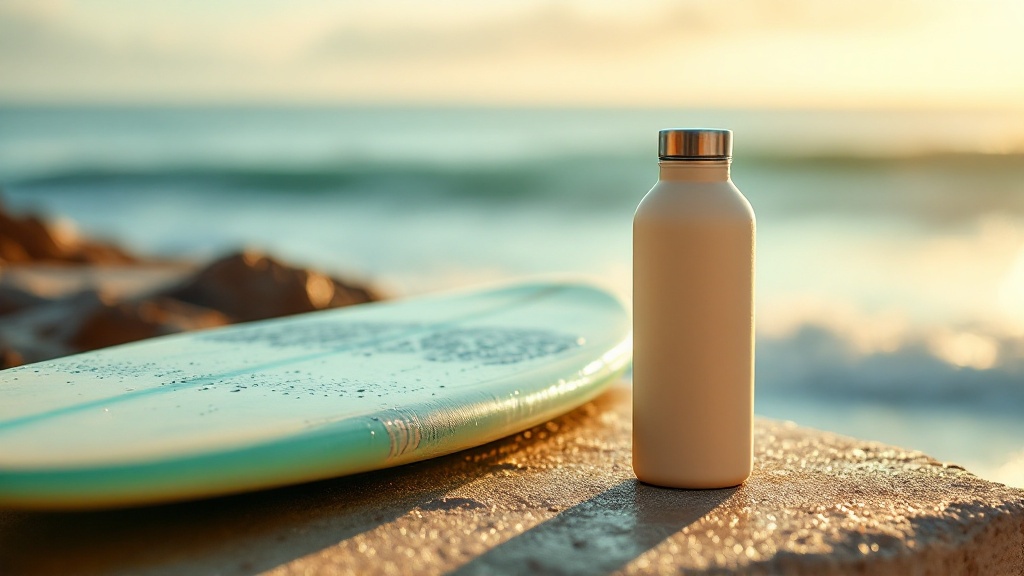
A water bottle in the car or beside your towel is the simplest fix. Electrolyte tablets (Hydralyte, Nuun) drop in nicely - drink half before paddling out and half after. For long sessions or hot days, a higher-sodium sachet (Liquid I.V., LMNT) earns its place.
Post-Surf
A real meal soon after the session, plus another 500 ml of fluid, brings most casual surfers back to baseline. For multi-session days (dawn and afternoon both), be more deliberate about the gap-between hydration.
Frequently Asked
Do surfers get dehydrated?
Yes - more than most think. Wind, sun, and paddling effort drive sweat losses; the cold water masks the feeling. Pack a bottle for after the session.
Should I drink electrolytes before surfing?
For long sessions or hot days, yes. A tablet dropped into a bottle before paddling out, with the rest waiting for after, is a reasonable approach.
Can I drink salt water?
No - sea water sodium concentration is around 35,000 mg/L, far above blood. Swallowing it makes dehydration worse, not better.